

Energy Star Builders
Shawn & his team at growth key marketing have done an exceptional job bringing my business up to speed with all of the modern tech & automations.
97% Client Retention Rate
Your corporate market is not an audience. It is a list of buildings within driving distance of your kitchen — and this is the only channel where you can select that list rather than bid on words and hope.
Partner
Meta
Partner
Partner
TikTok
Partner
Partner
Meta
Business Partner
Certified Marketing Partner
TikTok
Marketing Partner
LinkedIn Ads for catering companies is B2B advertising that targets corporate food-service buyers by company size, industry and location rather than by search intent — the only channel where a caterer's actual addressable market, the offices within delivery range above a headcount threshold, can be selected directly and advertised to by name.
Why LinkedIn, for this buyer
Offices above a headcount threshold within your delivery radius. In most metros that is a few hundred employers, not an abstract audience — and LinkedIn is the only platform where company size, industry and location are selectable together, so the list can be addressed directly.
Office managers, executive assistants and people-ops coordinators place corporate orders, and they are judged on whether the meeting ran smoothly and nobody was left out. Dietary coverage, on-time delivery and a single point of contact matter more than the menu photography does.
Nobody decides to need catering; a meeting gets scheduled and suddenly they do. No targeting can observe that moment, which is why this channel is presence against a fixed list over time rather than a response to intent.
The B2B advantage
Trusted by LinkedIn. Certified for Results.
Official LinkedIn
Marketing Partner
Why it matters
Corporate catering is an audition business. The first order is scrutinised in a way no later order ever is, and everything after it happens without a decision being made.
One meeting, and a standing Thursday order
Thirty people, Thursday, and the office manager now has a problem that did not exist an hour ago. They are not going to research: they will use someone they have heard of, and the shortlist is whatever is already in their head.
On time, labelled, dietary requirements covered, nobody standing at an empty tray. The food matters less than whether the office manager had to think about it once after ordering.
The next meeting goes to the same caterer without a comparison, because switching means risking a repeat of a problem they no longer have. This is where the margin actually lives.
Office managers change jobs, and the good ones take their vendor list with them to the next employer. A corporate account can outlive the relationship that created it.
So the campaign is not trying to win an order. It is trying to be the name already in the room when a meeting gets scheduled — which is a presence problem, not a response problem, and is budgeted very differently.
The hard truth
LinkedIn is the most powerful B2B channel — and the most expensive. Three things quietly drain most budgets. Here’s each one, and how we handle it.
Common pitfall
A LinkedIn click runs $8–$15 — several times a Google or Meta click. Aim that budget at a broad audience and most of it reaches people who will never buy from you.
How we fix it
We build the list before the ads — by title, seniority, company size and industry — so every expensive click lands on someone who can actually sign the contract.
Common pitfall
LinkedIn is notorious for form-fills from people with no budget and no authority. A lead sitting in your CRM isn't a lead your sales team can close.
How we fix it
We add qualification steps, sync every lead to your CRM with full attribution, and grade campaigns on booked meetings — not raw form-fills.
Common pitfall
Most B2Bs run a single static image ad to everyone. It burns out in weeks, and it speaks to a cold VP exactly the way it speaks to an in-market analyst.
How we fix it
We build creative per segment and per stage, then rotate it on performance — so the message stays fresh and meets each prospect where they actually are.
How the budget splits
At $8–$15 a click the audience definition is the campaign. Here is how budget divides on a corporate catering account.
Office managers, EAs, people-ops and workplace coordinators at companies above a headcount floor inside your delivery radius. This is the audience that actually places orders and it takes the largest share.
Seniority filters mislead here. The person ordering lunch for forty people is rarely senior, and targeting VPs because they sound important reaches people who have never placed an order.
The specific employers you want, selected by name. New office openings, companies that have just raised, and buildings you already deliver into where you only hold one floor.
The highest-return slice, because it is the only one where the target list is a business decision rather than a platform setting.
HR and internal-events owners buy the all-hands, the holiday party and the quarterly offsite — larger, planned further ahead, and a different message from the weekly lunch.
These are the orders that justify the account internally. They are also seasonal, so this slice should expand into planning windows rather than run flat.
Anyone who has viewed corporate menus or started an enquiry, held over weeks. Far cheaper than cold reach and the closest thing this channel has to catching the calendar trigger.
Since the buying moment is invisible, retargeting is how you are present at it. Underfunding this slice is the most common structural mistake.
Broad radius targeting without a company-size filter. That is a Meta strategy running at LinkedIn prices, and it reaches a large number of people who will never order lunch for anyone.
The whole reason to pay $12 a click is that the filter exists. Not using it makes the channel indefensible.
Where it fits
Not a rivalry — the best B2B programs run all three. The question is what each one is for.
Captures people already searching. Unbeatable when someone is looking for you — but you can't choose who that is, and most of your market isn't searching yet.
Goes straight to the decision-makers who fit your ICP, whether or not they're in-market today. You create the demand instead of waiting for it.
Phenomenal for scale and creative testing at a low CPC. But the B2B targeting is inferred and broad — you pay for a lot of the wrong people to find a few right ones.
Targeting is declared, not inferred: real job titles, real companies, real seniority. You pay more per click and waste far less of it.
What it costs
Corporate catering has the most alarming click-to-order ratio in this matrix and one of the better returns, because the unit that matters is an account rather than an order. Here is the arithmetic we run on the first call, with your numbers.
| Cost per click | $8–$15 | Against a first order that may be $400. On its own this comparison makes the channel look impossible. |
|---|---|---|
| Addressable companies in range | 150–600 | Offices above a headcount floor inside your delivery radius. Countable, which is the channel's whole advantage. |
| Cost per first corporate order | $220–$550 | Genuinely expensive if the account orders once. The number below is why that rarely decides it. |
| First orders that repeat within 90 days | 40–60% | Set almost entirely by delivery execution and dietary coverage, not by the campaign. Marketing buys the audition; operations wins the account. |
| Cost per retained corporate account | $400–$1,200 | Against an account that may order weekly for years and often follows the office manager to their next employer. |
| Sensible monthly budget | $1,500–$5,000 | Bounded by how many companies are actually in range. A small list reached often beats a large list reached once. |
These are our observed ranges across corporate catering accounts, not published research — metro density, delivery radius, minimum order value and how many employers sit inside that radius will move all of them. The line worth arguing about internally is the repeat rate: it is the only one this channel does not control, and it decides everything above it.
Know the surface
LinkedIn has a format for every stage. Picking the wrong one is a quiet, expensive way to waste good targeting.
Native ads inside the LinkedIn feed — single image, video or carousel. The workhorse for putting a message in front of a targeted audience where they already are.
A direct message with a single CTA, delivered to the target's LinkedIn inbox. High intent, high cost — used sparingly on the accounts that matter most.
Multiple swipeable cards in one unit — walk a prospect through a proof, a process or a set of outcomes without needing them to click away.
Expertise-first video that builds trust with a cold audience before asking for anything. Best for the top of a longer B2B cycle, where the first job is credibility.
Plus Text, Dynamic, Follower and Spotlight ads for the edges of a program — we’ll tell you which ones your goal actually needs, and which are a distraction.
Why us
We've managed $30M+ in ad spend, and the LinkedIn rule is unusually blunt: the click costs several times what it does anywhere else, so precision is not a refinement — it is the entire strategy.
By title, seniority, company size and industry, so every expensive click lands on someone who can actually sign the contract. Most accounts do this in the opposite order and pay for the lesson.
LinkedIn is notorious for leads with no budget and no authority. We grade on booked meetings and cost per SQL, which is a harder number to report and the only one worth having.
A single message aimed at an entire buying committee wastes the platform's one real advantage. Seniority and funnel stage each get their own treatment.
Campaign, segment and creative travel with the lead, so you can see which slice of the list closed rather than guessing from platform-side conversions.
We don't run LinkedIn Ads for your direct competitor. One client per category per market.
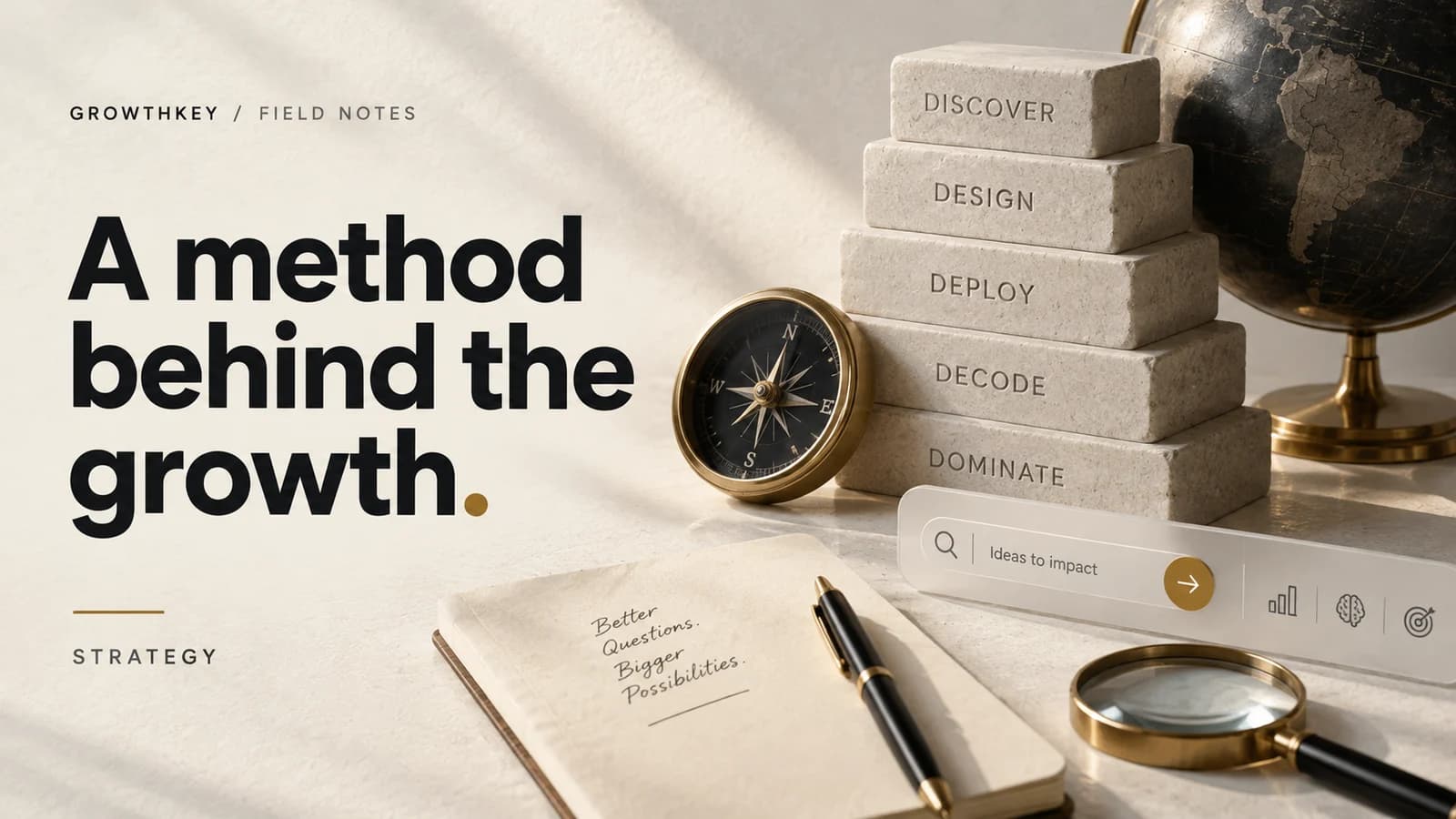
Every account runs the same five-stage loop — Discover, Design, Deploy, Decode, Dominate — so nothing depends on guesswork or heroics.
$30M+
In ad spend managed
4.8×
Average ROAS, active accounts
40+
Service businesses scaled
100+
Performance campaigns delivered
The offer
Start with a free LinkedIn Ads audit. We'll show you the real size of your addressable audience, what share of your current spend is reaching people who cannot buy, and your cost per booked meeting — no commitment, yours to keep.
Knowledge base
The same arithmetic we run on your account, written down.
Energy Star Builders
Shawn & his team at growth key marketing have done an exceptional job bringing my business up to speed with all of the modern tech & automations.
Koalaty Remodel
My vision came alive effortlessly. Their blend of casual and professional approach made the process a breeze. Creativity flowed, and the results were beyond my expectations.
Lumiere Catering
Working with Growth Key Marketing has been a fantastic experience! They helped me set up Facebook Ads that actually work. I was blown away by how quickly the ads started bringing i...
Air1 Moving and Storage
It was an absolute pleasure working with them to create a website that truly reflects the quality and professionalism of their moving and storage business. We're thrilled to hear that the new site is making such a big difference! Our goal is always to deliver a seamless experience—both for our clients and their customers—so it's amazing to know that their new website is not only looking great but also helping build credibility and improve functionality. We truly appreciate their trust in GrowthKey, and we're here whenever they need us. Wishing them continued success! 🚀
Space Production
Growth Key Marketing completely transformed our lead generation. Their targeted Facebook campaigns delivered high-quality inquiries almost immediately, and the ROI has been outstanding from day one. Highly recommend their expertise!
NAVA Management
The team at Growth Key took our outdated online presence and turned it into a sleek, high-converting website with smart automations. Leads are coming in consistently now—it's made running the business so much smoother. Truly impressed!
Alluna Dental
We partnered with Growth Key for both website redesign and ongoing digital marketing. The new site looks professional and patient-friendly, while their Facebook ad strategy brought in a steady stream of new appointments. Excellent communication and real results!
CIG Law
Growth Key Marketing nailed our rebranding and online marketing needs. From custom automations that save us hours every week to effective ad campaigns that attract the right clients, they've been a game-changer for our firm. Professional, creative, and dependable.
Move Happy Moving
I can't say enough good things about working with Shawn and the Growth Key team. They built us a modern website that showcases our services perfectly and set up automations for inquiries and follow-ups. Our online bookings have doubled—worth every penny!
FAQ
Straight answers about running LinkedIn Ads for a corporate catering company — tight enough for AI to lift verbatim.
Because your addressable market is a list of buildings, not a set of search terms. LinkedIn is the only channel where company size, industry and location are selectable together and specific employers can be named — so budget reaches office managers inside the offices you actually deliver to, instead of everyone within a radius.
Clicks run $8–$15 and cost per first corporate order typically lands between $220 and $550. The number that matters is cost per retained account, usually $400–$1,200 against an office that may order weekly for years. Most caterers run $1,500–$5,000/month.
Office managers, executive assistants, people-ops and workplace coordinators. Seniority filters actively mislead here: the person ordering lunch for forty people is rarely senior, and targeting VPs because the title sounds important reaches people who have never placed an order in their life.
Reliability over appetite. The orderer is judged on whether the meeting ran smoothly and nobody was left out, so dietary coverage, on-time delivery, clear labelling and a single point of contact land harder than menu photography. They are buying the absence of a problem.
Yes, and it is usually the highest-return slice. New office openings, companies that have recently raised, and buildings where you already deliver to one floor but not the others can all be named directly. That capability is the main reason to be on this platform at all.
You cannot, and any agency claiming otherwise is guessing. The trigger is a meeting appearing on a calendar, which no targeting can observe. The channel works by presence — being the name already in the office manager's head — which is why retargeting and sustained frequency matter more here than clever timing.
Usually yes, and often better spent narrower. With only a few hundred companies in delivery range, a small list reached frequently outperforms a large list reached once. Below roughly $1,500/month the frequency drops far enough that the impressions stop registering.
First orders typically appear within the first two months, but the account is not judged there. The repeat rate at ninety days is what determines whether the channel worked, because the second order is where the economics turn.
Yes. Search catches the urgent Thursday order from someone who already needs catering today; LinkedIn builds the recognition that puts you in their head before the meeting is scheduled. Corporate catering has both a 48-hour buyer and a planned buyer, and the two channels cover different ones.
Retained corporate accounts and repeat rate, not order count. A month of one-off orders and a month that opens three recurring accounts can look identical in revenue and are worth entirely different amounts.
Never in the same delivery radius. The addressable list is a few hundred companies, so two clients would be buying impressions against each other in front of the same office managers.
It's yours. The campaign structure, the audiences, the named-account lists and the creative stay with your business — we manage it, we never hold it.
More for catering companies
A free LinkedIn audit: the real number of companies in range, what share of your current spend reaches people who never order, and your cost per retained corporate account — no commitment, yours to keep.


