Lead Generation / Home Services
Shared leads vs. exclusive leads: the real math
The $25 Angi lead usually costs more than the $80 exclusive one. The arithmetic — and the Angi vs. Thumbtack mechanics — the platforms hope you never run.

In this article
The trap in the low sticker price
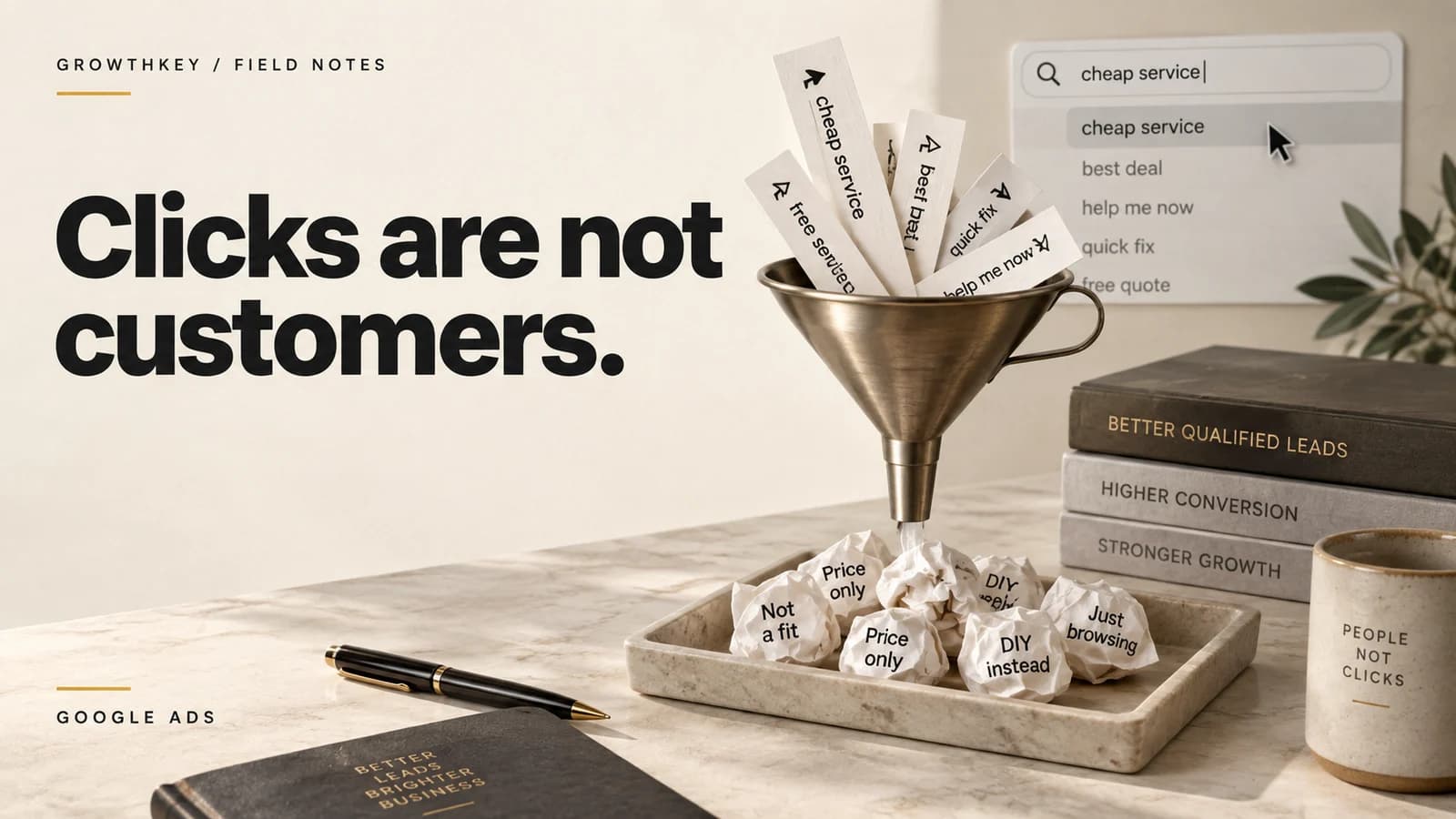
Angi, Thumbtack, Networx and the rest sell the same homeowner to four or five contractors at once. The sticker price looks great — $25, $40, maybe $60 a lead — and that is exactly why the model persists. But the number that runs your business is not cost per lead. It is cost per booked job.
A shared lead is a footrace. Lead Connect data shows roughly 78% of customers go with the first responder, so four competitors are effectively fighting over one phone call, and everyone pays whether they win or not.
How the two big platforms actually work
The mechanics differ enough to matter. Angi typically runs an annual access fee (commonly reported around $300) on top of per-lead charges that industry write-ups put at roughly $15–$85+ depending on trade — roofing and HVAC at the top — with 12-month auto-renewing contracts and cancellation windows that catch people. Thumbtack is pay-as-you-go: leads bill through a credits system against budgets you set, typically landing in the $25–$75 range with wider extremes, no annual contract. Prices on both move constantly — treat every number in this paragraph as a 2026-reported range, not a quote.
What the two share is the part that decides your economics: the same customer can be sold to multiple pros, the platform owns the profile your reviews live on, and the moment you stop paying, everything stops with you. Here is the full picture side by side:
| Angi Leads | Thumbtack | Your own pipeline | |
|---|---|---|---|
| How you pay | Annual access fee plus per-lead charges | Per lead, via credits against budgets you set | Ad spend you control on Google, LSAs, Meta |
| Reported cost per lead | $15–$85+, trade-dependent | $25–$75 typical; wider extremes | Your market's auction sets it — derive yours |
| Who else gets the lead | Multiple competing pros | Multiple competing pros | Only your phone rings |
| Contract | 12-month auto-renew commonly reported | No long-term contract | None — stop and start at will |
| Who owns the customer | The platform — its brand, its reviews | The platform — its brand, its reviews | You — your page, your data, your reviews |
| When you stop paying | Everything stops | Everything stops | Data, rankings, and audiences remain and compound |
Run the numbers side by side
Here is an illustrative comparison for the same $1,000 of monthly spend:
- Shared leads: $25 each buys 40 leads — but split five ways with a speed race, closing 10% is a good month. Four booked jobs → $250 per job. And you spent your afternoons dialing people who already hired someone else.
- Exclusive pipeline: $80 per lead from your own ads buys 12–13 leads that only ring your phone. Close a realistic 1-in-3 and you booked four jobs too — for the same money, without the race, and the asset (the ads, page, and data) is yours and improves every month.
- The compounding difference: shared-lead spend disappears when you stop paying. Exclusive-pipeline spend leaves behind conversion data, retargeting audiences, reviews, and rankings.
- The scale check: industry write-ups peg Angi's platform-wide close rate near one in ten, which is how an effective cost per booked job in a competitive trade climbs past $1,000 even while the sticker says $60. Run YOUR close rate against YOUR per-lead cost before trusting either number.
Disputes, credits, and the fine print
Both platforms will credit genuinely bad leads — wrong number, wrong service, spam — but the burden of proof is yours and the window is short. The operators who get their money back run it like a process: call tracking on the platform number so every lead has a recording and a timestamp, a dispute log filed the same day the bad lead lands, and a monthly reconciliation of credits requested versus granted.
Two contract habits pay for themselves. Read the renewal terms before you sign anything annual — auto-renewal and early-exit fees are where the reported horror stories live — and calendar the cancellation window the day the contract starts, not the month it renews. None of this is exotic; it is the same discipline the platforms count on most contractors not having.
So — are the platforms ever worth it?
Honestly: sometimes, in a specific role. If trucks are idle and a shared lead books work at a cost per job your ticket can carry, take the fill — idle capacity is more expensive than expensive leads. What the platforms cannot be is your growth strategy, because nothing compounds: no data accrues to you, no ranking builds, no customer list grows, and your margin erodes in a five-bid race. Grade them the way we grade everything — cost per booked job against your average ticket — and use them for what they are: a faucet you rent, next to a well you own.
How to transition without a scary gap
We never tell an owner to cancel Angi on a Friday. The sane path is parallel: keep the shared-lead faucet on while your own pipeline (ads, landing page, tracking, fast-response automation) spins up, measure both on cost per booked job for 60–90 days, then shift budget toward whichever wins. In our accounts, it has not been a close contest.
If you want the comparison run on your real numbers, that is a fifteen-minute exercise in our free audit.
Frequently asked questions
Are Angi leads worth it for contractors?
As capacity fill at the right price, they can be — an idle truck costs more than an expensive lead. As a growth strategy, no: leads are shared with competing pros, the platform owns the reviews and the customer, and nothing compounds to you. Grade them on cost per booked job against your ticket, and note that with a platform-wide close rate reported near one in ten, effective costs in competitive trades commonly run several times the sticker price.
What is the difference between Angi and Thumbtack for pros?
Mostly billing mechanics. Angi commonly pairs an annual access fee with per-lead charges and 12-month auto-renewing contracts; Thumbtack bills per lead through a credits system against budgets you control, with no long-term contract. The full head-to-head is here. The economics that matter — shared distribution, the speed race, platform-owned reviews — are the same on both.
Why are shared leads so hard to close?
Because roughly 78% of customers go with whoever responds first, and on a shared lead four or five pros get the same customer within minutes — see the response-time research we cite. You are not competing on quality; you are competing on seconds, against everyone who paid for the same phone number.
Can I get refunds for bad leads?
Both platforms credit clearly invalid leads, but you carry the proof and the deadlines are short. Track calls so every lead has a recording and timestamp, dispute the same day, and reconcile credits monthly. Operators without that paper trail mostly pay for the bad leads too.
How do I replace platform leads without losing revenue?
Run parallel for 60–90 days: keep the platform faucet on while your own pipeline — ads, landing page, tracking, fast response — comes up to speed, measure both channels on cost per booked job, then move budget to the winner in steps. The transition risk everyone fears comes from switching in one move; almost nobody has to.
Sources & further reading
Are your leads becoming customers?
Let’s review your campaigns, tracking, and the steps between a click and a customer. Get a clear view of what to fix first.
- Your business, your numbers
- Practical next steps
- A conversation with our team
No commitment. Yours to keep.